



agc system
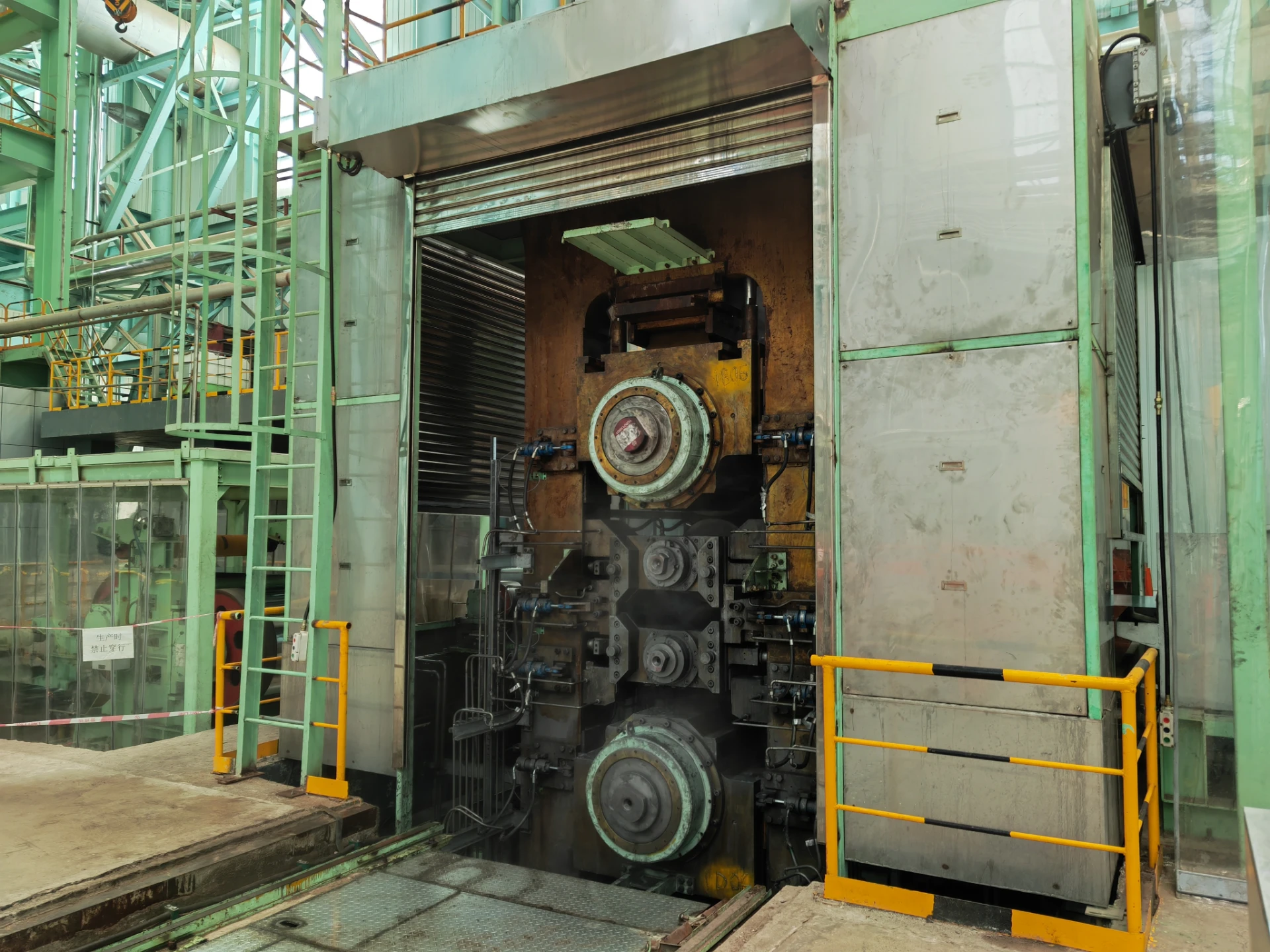
In modern manufacturing, particularly in industries like steel production, AGC systems (Automatic Gauge Control systems) are indispensable for ensuring consistent product quality and optimal production efficiency. The primary function of an AGC system is to maintain the precise thickness of materials during production, which is critical for the final product's quality. These systems work by automatically adjusting the gap between rollers based on real-time measurements of material thickness, ensuring uniformity throughout the production process. With advanced technologies like automatic pressure control and automatic water pressure regulators , AGC systems have evolved to provide even more precision and efficiency in industrial applications. The integration of AGC systems in modern production lines has revolutionized manufacturing processes. These systems use sensors to continuously monitor material thickness and other key parameters, adjusting the process settings to maintain consistency. This automated adjustment reduces human error and ensures high-quality output, making AGC systems essential for industries where precision is paramount. The Role of Automatic Pressure Control in Enhancing AGC Systems Automatic pressure control plays a significant role in the performance of AGC systems by ensuring that the pressure applied during the manufacturing process remains consistent. In steel production and other heavy industries, maintaining accurate pressure levels is critical for controlling material thickness and ensuring the process runs smoothly. By regulating the pressure applied to the rollers, automatic pressure control helps maintain the integrity of the product and prevents issues such as over-compression or uneven thickness. In an AGC system , automatic pressure control adjusts the hydraulic pressure in real time to match the desired gap between the rollers. This precise control reduces fluctuations in pressure that could lead to defects in the final product, ensuring that the material maintains a uniform thickness. Furthermore, it optimizes energy use by applying the exact amount of pressure required, enhancing the overall efficiency of the manufacturing process. By integrating automatic pressure control into AGC systems , manufacturers can improve the quality of their products, minimize waste, and increase production speeds. The combination of automated adjustments and precise pressure control allows for a smoother, more efficient production process. The Importance of Automatic Water Pressure Regulators in AGC Systems In many industrial applications, particularly in steel rolling mills and other metal processing plants, automatic water pressure regulators are an essential component of the AGC system . These regulators help maintain the required water pressure during cooling and lubrication processes, ensuring that the material remains at the correct temperature while being processed. By precisely controlling the water pressure, these regulators prevent overheating or undercooling, which can negatively affect the quality and consistency of the final product. Automatic water pressure regulators work in tandem with AGC systems to ensure that the temperature of the material remains within the optimal range throughout the production process. By maintaining the correct cooling and lubrication conditions, these regulators help prevent issues like warping, distortion, or other temperature-related defects. This is especially important in high-speed production environments, where precise temperature control is crucial for maintaining material integrity. In addition to maintaining material quality, automatic water pressure regulators also help reduce operational costs by optimizing water usage. By adjusting the pressure to the exact requirements of the process, these regulators ensure that water is used efficiently, reducing waste and energy consumption. Tension Controllers: Balancing Efficiency and Precision in Manufacturing Tension controllers are another crucial component in the production process, particularly in applications like metal rolling, where precise control over tension is necessary to maintain material quality. In an AGC system , tension controllers ensure that the material is kept under the right amount of tension as it passes through rollers, preventing stretching, buckling, or other issues that could affect material thickness. Tension controllers monitor and adjust the tension on the material in real-time, making it possible to maintain consistent pressure and ensure uniform thickness throughout the production process. This real-time feedback allows the AGC system to continuously optimize the rolling process, preventing material defects and improving overall product quality. In addition to thickness control, tension controllers also help optimize the speed and alignment of the material as it moves through the system, reducing the likelihood of errors and improving the efficiency of the production line. Given the critical nature of tension controllers in industrial applications, understanding tension controller prices is important for manufacturers when making purchasing decisions. The price of tension controllers varies based on factors such as the complexity of the system, its size, and its specific features. Manufacturers should weigh the cost of the system against the potential improvements in efficiency, product quality, and operational costs when considering these components for their AGC systems. Evaluating the Cost-Effectiveness of Tension Controller Price When integrating tension controllers into an AGC system , cost is always a factor that needs to be considered. The tension controller price can vary significantly depending on the specifications and technology involved, and manufacturers must ensure that the benefits of improved tension control justify the investment. While high-quality tension controllers might come with a higher initial price tag, they offer significant long-term savings by reducing material waste, improving product quality, and enhancing overall production efficiency. Manufacturers can often expect a return on investment (ROI) through fewer defects, better material yield, and faster production speeds when they choose high-quality tension controllers . When evaluating the tension controller price , it's important to consider not just the upfront cost but also the long-term impact on overall production costs. By investing in advanced tension controllers , companies can enhance the capabilities of their AGC systems , improving consistency, reducing rework, and ultimately increasing profits. In summary, the AGC system , with its integration of automatic pressure control , automatic force regulators , and tension controllers , is a cornerstone of modern manufacturing. These systems work together to ensure precise control over material thickness, tension, and other critical parameters, resulting in improved product quality, efficiency, and operational cost-effectiveness.

We have successfully executed over 500
projects around the world,
many first-of-their-kind
research projects and products in China, including
We have successfully executed over 500
projects around the world,
many first-of-their-kind
research projects and products in China, including
-
2004
The 1st hydraulic AGC system for hot rolling of ribbon steel
-
2006
The 1st AFC system used for 1450mm skin pass mill
-
2009
The 1st 5-stand tandem line with 2-stand POR & Uncoiler for 650mm ribbon steel
-
2012
The 1st reversing mill for 1380mm strip
-
2016
The 1st soft-rolling system used in skin pass mill
-
2019
The 1st fully automated medium-width tandem cold rolling mill
-
2021
The 1st 5000KN Twin-stand double skin pass mill
-
2022
The 1st coupled pickling line & tandem cold mill with two modes - big roller & small roller
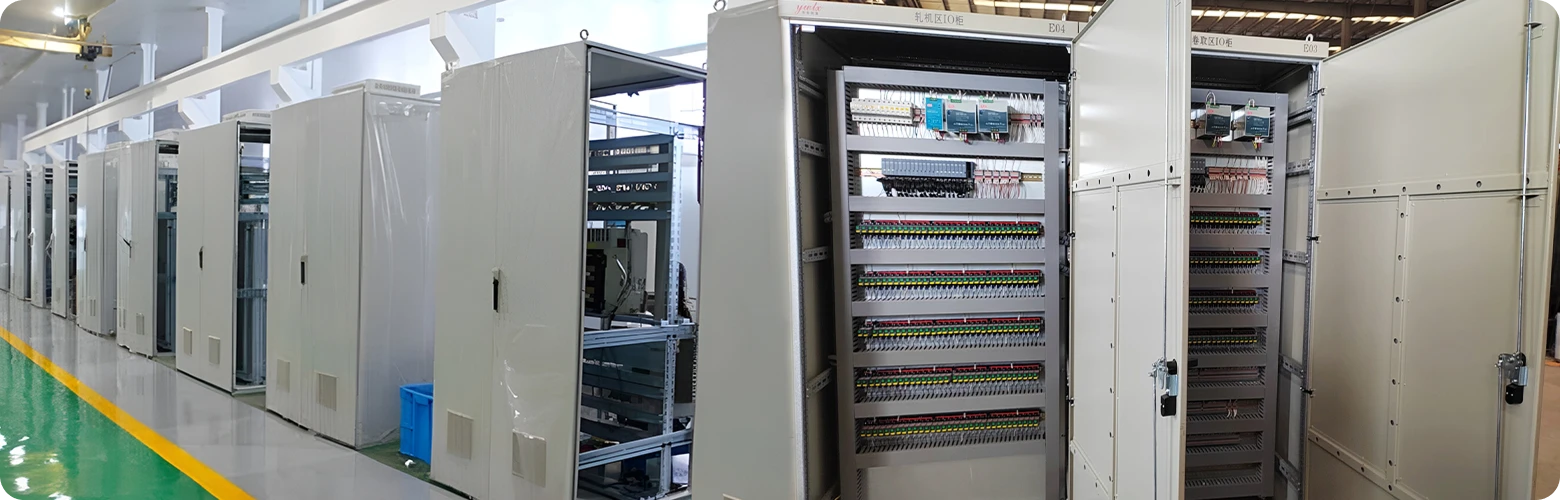
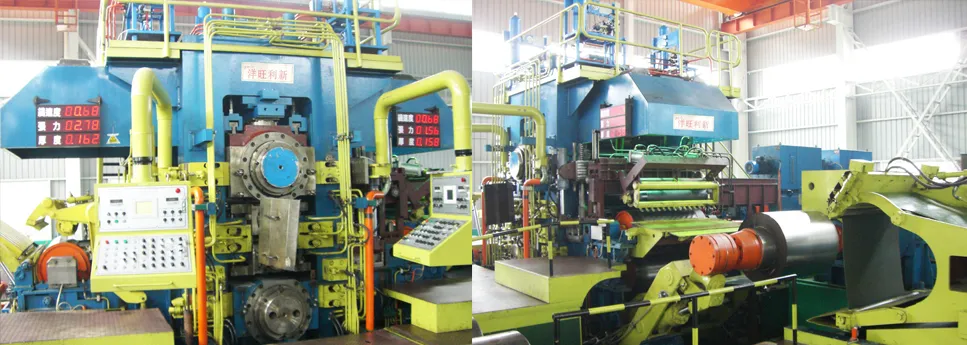
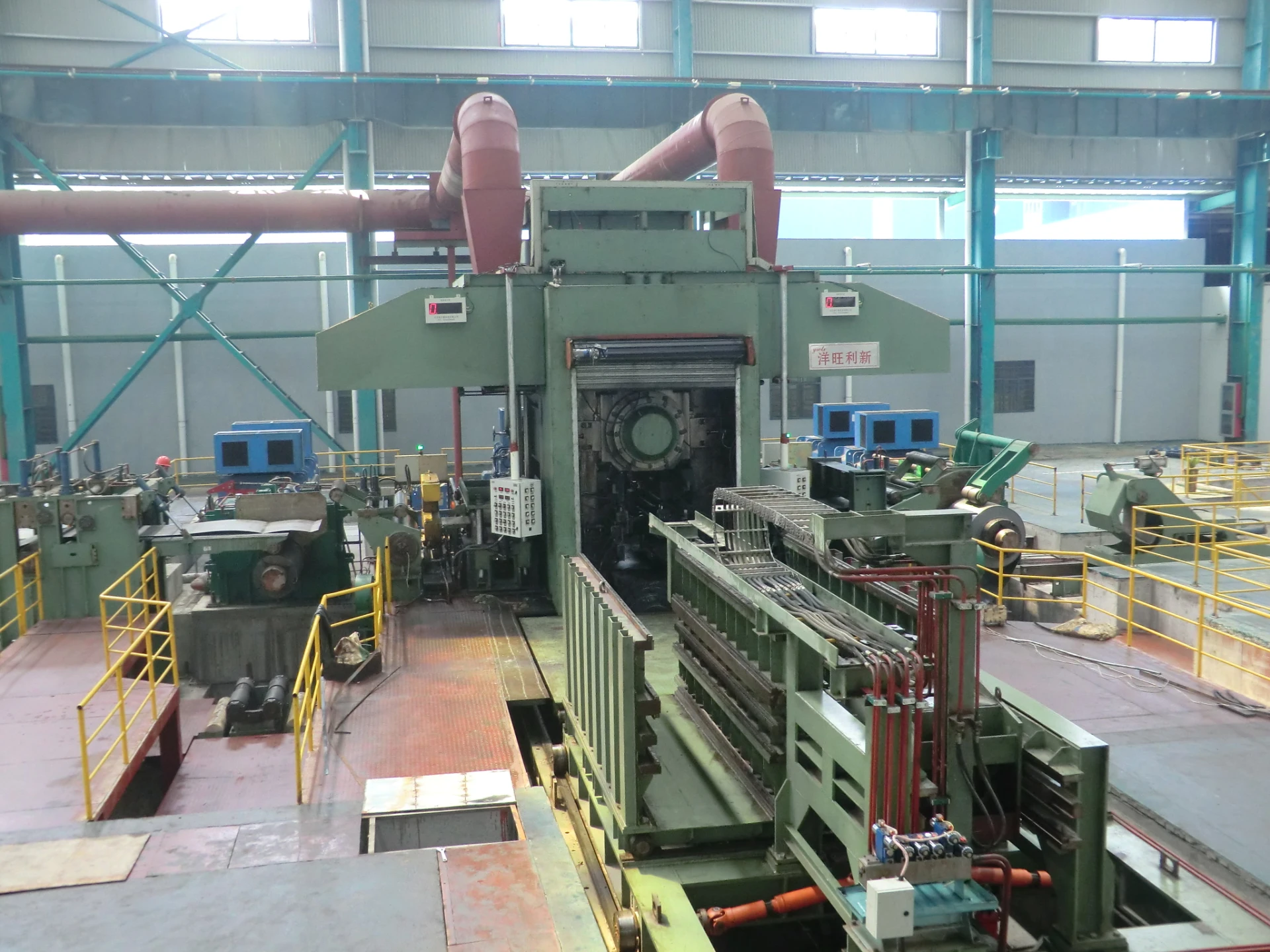

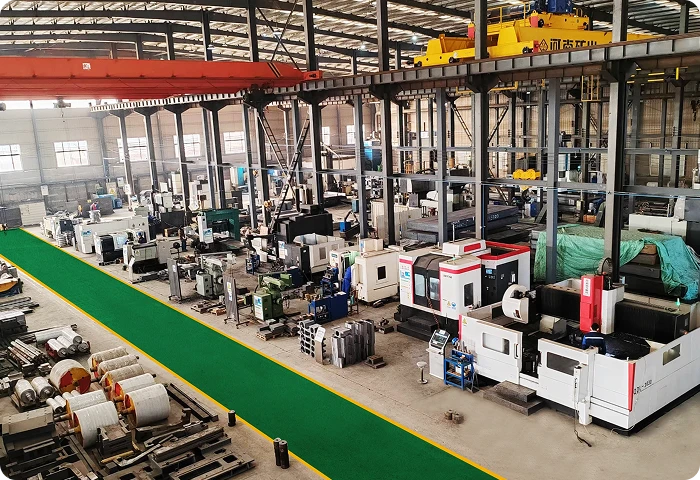
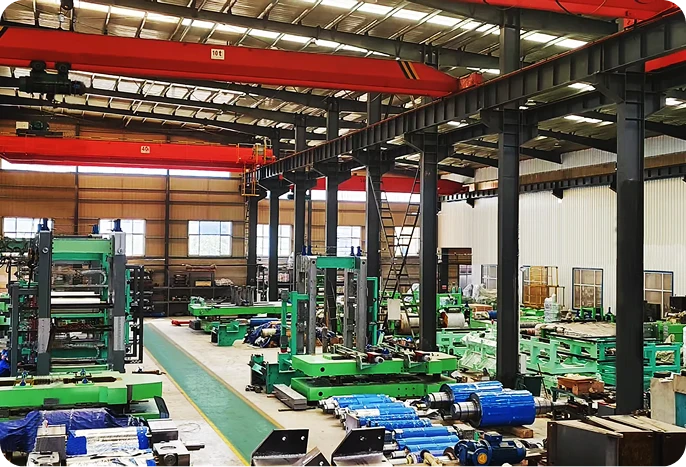
Yang Wang Li Xin operates a state-of-the-art facility over 66,000 square meters,and our manufacturing facility is fully equipped with high-tech machinery and high-capacity cranes. This enables us to handle large work pieces measuring 4.5m in width, 10m in length, and 1.5m in height, guaranteeing our capacity to produce 1800mm skin-pass mills and 1450mm rolling mills. The individual piece can weigh up to 100 tons.


Quality is fundamental to the enterprise survival. We have established a comprehensive and meticulous quality management system and have successfully obtained ISO14000 certification. Starting from the design source, it supervises the entire production cycle, including design, procurement, processing, assembly, in-factory testing, installation, and online commissioning. The workshop is equipped with measuring tools like vernier calipers, spectrometers, hardness testers, and ultrasonic flaw detectors. They are used to check materials and control tolerances to ensure the final equipment meets or exceeds requirements. All products have a unique code, This enables the easy identification and traceability of the equipment components and ensures full control of quality.


-
 Cladding Rolling Mill - Beijing Yang Wang Li Xin Sci&Tech Co.,Ltd. | Cold Rolling Technology&High YieldCladding Rolling Mill is a cutting-edge solution developed by Beijing Yang Wang Li Xin Sci&Tech Co.,Ltd. (formerly Shijiazhuang Yangwang Electromechanical Technology Co., Ltd.), offering a sustainable and efficient method for producing high-quality bimetallic and trimetallic strips. This technology addresses the limitations of traditional methods like hot roll bonding cladding and explosive claddi
 -
 Skin Pass Mill:Key Functions and Applications of Skin Pass Mill in Galvanizing Production LineIn the modern steel processing industry, galvanized sheet metal is widely used in various fields such as construction, automobiles, and home appliances due to its excellent corrosion resistance and wide range of application scenarios. On the galvanizing production line, the Skin Pass Mill , as one of the key equipment, is responsible for shaping surface roughness, improving sheet flatness, optimiz
 -
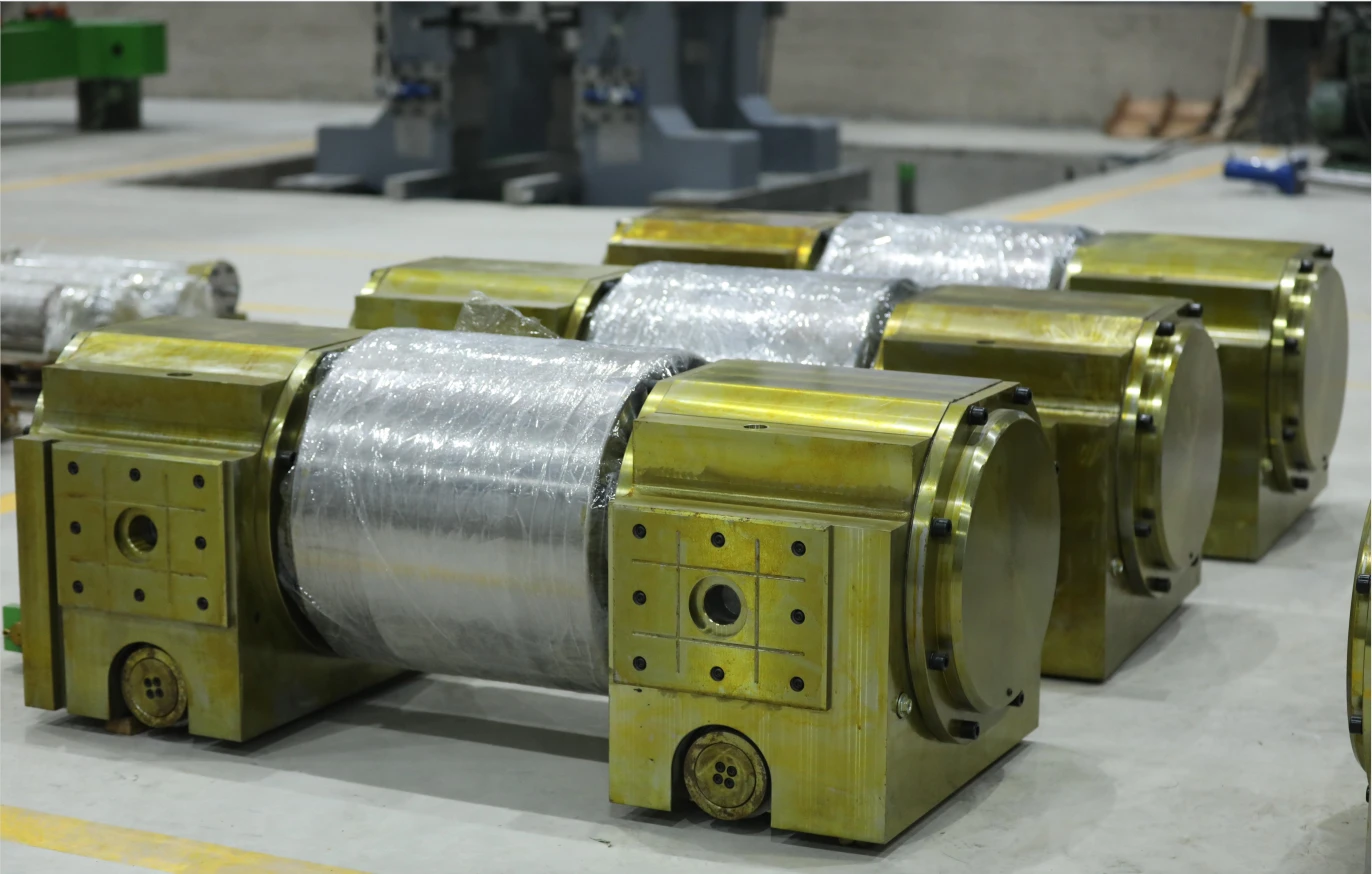 Cladding Rolling Mill - Beijing Yang Wang Li Xin Sci&Tech Co.,Ltd.|Cold Rolling Technology&Energy EfficiencyCladding Rolling Mill represents a significant advancement in metal bonding technology, offering a sustainable and efficient solution for producing high-quality clad materials. Developed by Beijing Yang Wang Li Xin Sci&Tech Co.,Ltd. , this innovative system addresses the limitations of traditional methods such as hot roll bonding cladding and explosive cladding . By leveraging cold rolling claddin


